 By Coco
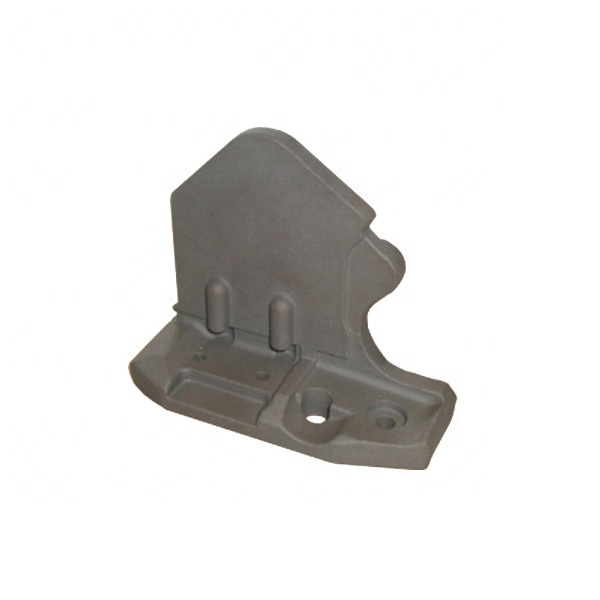
For a cast bracket, the relationship between mounting faces and working features can matter more than the outside profile. This review of Bracket D concentrates on drawing datums and machining references. It does not assume a particular shape or load rating from the catalogue name.
Choose references that reproduce the assembly
Identify the surfaces that actually locate the bracket in service. A convenient raw casting face may be unsuitable as the final inspection datum. Show how the bracket is constrained by its mating part and which features remain free. This allows the machining and inspection plans to use references that reflect the intended assembly rather than unrelated outside dimensions.
Connect holes and faces to those references
Mark the holes, slots, pads and shoulders that require positional control. Separate functional tolerances from cosmetic outline dimensions. If two holes accept a common pin or shaft, their relationship should be specified directly. Tightening every dimension without identifying the critical relationship can increase cost without improving fit.
Provide stable machining support
Discuss how the unfinished bracket will be located and held during its first operations. Thin arms and uneven raw surfaces may need deliberate support to avoid deflection under clamping. Any temporary locating pads or machining stock must remain consistent with the finished envelope. The production route should show how the final datum is established and protected through later setups.
Make the first article informative
Ask for recorded measurements of the datum features and the dimensions that depend on them. If a feature is inaccessible after assembly, agree how it will be checked before delivery. Compare the first article against the approved drawing revision, not only against a sample whose original tolerances are unknown. Document drawing changes before releasing repeat production.
Supply a marked drawing and the mating-part interfaces for Bracket D. A casting-and-machining enquiry is more useful when the critical datum relationships are highlighted rather than buried in a general tolerance note.
Related reading: Casting Machining Steel Parts; Investment Casting Mechanical Components.
Get Investment Casting
Join Hengke Metal Newsletter to get more information of different premium investment casting in China.